I am going to welcome Chris Friendman to my Blog he has written a one book for Shadow Warrior Press and revised and improved it before self-publishing it in China and offering it directly on Amazon, trained in Shaolin Kung-fu in China, as well as, other Chinese martial arts. He also writes for JetLi.com and a kung-fu magazine. You also offer a travel service to train in Kung-fu in China as well. Not to mention other styles of martial arts here in the states... Thats certainly a list of accomplishments, is there anything I left out?
Hi Ron well I am now embarking on the role of a novelist writing my first novel in the true crime genre.
Now I was thinking of not putting you on the spot but, no... The hell with it, I am gonna put you on the spot. You used to train in the Bujiinkan, as well, didn't you?
Yes, I trained in Bujinkan for about seven years. During that time I also crossed trained in several style. I have always used free sparring as part of my training and as most know traditionally in the Bujinkan they don’t spar, as part of their training. So I would train in systems like Sambo and Judo during that time. I reached the rank of Shodan then, transferred over to the Chinese arts. I was always slightly more interested in the Chinese culture and, liked the idea of having many solo drills and routines to do as part of my training.
Now you've seen the bad with it and I am not ask you about it. Its been discussed publicly on Facebook and privately. I am not going to beat a dead horse. Your instructor was a pretty amazing guy and you talked about him in your book, would you share that story?
Several of the Bujinkan instructors I trained under worked in security and law enforcement. One worked as a guard in Rykers Island and told many stories of using the stuff in real life. There were a couple of other instructors they had brief brushes with adversaries on the streets also with interesting stories to tell.
Now to be honest, I wanted to get that story out there because regardless of the art, he seemed like a very good guy and a highly skilled martial artist. I want to use him as an example of what the good Bujinkan Instructors look like...
So can we agree to leave all that under the bridge and talk about you and China?
Well, that particular instructor was very humble and friendly. He obviously had a lot of real life experience and, was not puffed up with false prestige. Sure I love to share my adventures here with anyone who is willing to listen.
Now, lets start with why you went to China? And how long you been there?
I always wanted to train in Asia. I grew up watching kung fu movies on channel five. I would put on a karate gi after and, go into my backyard in Long Island, New York do kata and imagine I was one of those guys in the movies. I got my first chance to take a two week trip there to train. Loved it, met a friend while there and, made the plan. I have been living here about eleven years already.
What is it like coming back to the US when, you have been living in China so long?
I feel really nervous. The people their behavior everything. The thing that makes me most nervous is how easy it is to get into a conflict with people in the states. Very different from China.
Have you met Jet Li yet? What's he like?
I never met Jet Li. I did do some extra work on films in the past but, never got to meet any of these big wigs.
What are your instructors like in China?
They have all been really nice and open with me. I will only train with teachers whose personality suits mine. That goes for in the states as well. I don’t need a Master to tell me how to live sleep and eat. Just someone who is friendly easy going and willing to teach me what I’m looking to learn.
Now you wrote an article for this blog, detailing the differences in how the training in China is so different from the US would explain that here?
In the states there is more real life violence. Here they fight as in Sanda but it is mostly for a living like a job. Very few people get into fights on the streets here. The motivation is different. The basics are very solid in China, they have more patience and discipline you can say. Also usually there is less cross training. The country isn’t as open as in the US. Both are good and have their benefits.
So the Chinese arts you have studied do stress Sparring Correct?
Since I have been in China I have studied three system each has its own story. Baguazhang in Beijing. I took private lessons and every once in a while I would have a partner and do some application. As far as I know his group classes didn’t spar. Back in the state where I did Bagua Zhang they spared every week, and did special drills as well. Shuai Jiao (Chinese wrestling) which is like a very aggressive version of Judo, where you wear short sleeve jackets and, very aggressively grab yank pull and throw each other. I trained with professional fighters the majority of the time and, the wrestling sparring was very rough. I got my ass handed to me weekly.
Within Songshan Shaolin all the school do Sanda as part of their curriculum. School levels in Sanada vary. I train once a week with full time Sanda fighters and, also spar with my traditional Shi fu students. Sanda is like most other forms of kickboxing but, also has throws. I also had a couple of real incidents but, we can save those stories for another time.
And how do they feel about Grappling? They are not all limited to just striking as seen in many forms of competition like Sport Karate?
Sanada has throws but, many schools these days seem to be neglecting them and, focusing on purely kickboxing aspect of it. Qin Na which has always been an integral part of Shaolin and, other styles of kung fu, has become very rare around here. Luckily I have found an old school teacher that knows the stuff well. Qin Na has all kinds of locks holds and escapes, even some ground fighting. The Baugua Zhang had lots of locks escapes and thows, but no ground fighting. Shuai Jiao was all throws. One of my Shuai Jiao coaches went on to become a MMA fighter. Because he came from a Shuai Jiao background when he began to cross train in BJJ, he picked it up real quick. He is a Beast on the ground weighs 125 pound and, can just destroy me on the ground and I’m 170 pounds and, was at one time a decent ground fighter.
So you've read the Shadow Warrior version of World's Deadliest Fighting Secrets, what are your thoughts on the Book in general?
Very interesting read. Count Dante was quite the character. I heard he was a very good fighter so there is no disputing the guy had skills and, was tough. I don’t agree with his philosophies. Firstly, in my opinion, martial arts are more than just fighting and, if you learn to control your mind and emotions you can not only avoid many fights but, improve health. I think if you had an option of using your martial arts to live a long healthy life or, a reckless dangerous one, the former is better. The fact that he died young and, even one of his students were killed says something about this point.
How about Count Dante and, his view of martial arts and racism in the martial arts?
I agree with him on that point. Prejudice suck and is evil in any shape or form. To fight against it is righteous and courageous.
Did you have any experiences with Racism in the Martial Arts, in China?
It is very subtle and sneaky form. They won’t come out and, say something but, they are very insecure around foreigners as they call us here. Especially, around their woman. As far as martial arts training no. On the contrary my teachers have been very happy to have such a dedicated and, sincere student.
I would say when have grown a lot more beyond that here in the US, wouldn't you?
Both have been important parts of my growth. I had a wild up bringing and, now to be in the strict environment of Chinese life style helps to balance things out. But, for people growing up in China it is like they are in a bubble. They are very limited to what they experience and, know about the rest of the world. I also am very grateful to have lived in another country, it teachings me a lot, to see things from other perspectives.
In fact, I think the world of martial arts has opened quite a bit in our life times. I mean we have experienced a flowering and, openness to be able to learn martial arts as we have in the years since Dante's time but, we have also seen a rise in frauds and invented lineages as well... But, have you seen the same patterns as well in China?
In China if someone creates a new branch of an existing style, for example my Bagua Zhang teacher did. It comes from the traditional stuff and, not some imaginary linage. But that is my only experience with that subject. There might be people in China making up lineages. I don’t even really think making up a style is so bad, if the artist is gifted, the problem is they often lie about the history to seem more legit.
Now these adventures, seems the only word which comes to mind, you sell. Allowing people to come to China and train there, is amazing. I mean its living the dream for many martial artists... Its not just site seeing, its hard style training. Very serious stuff right?
Yes, the training is hard but you can do as much as you feel comfortable with. Many student here are young and, train full time so if someone older and, don’t train for a living, they will understand the fitness level won’t be the same. So it will be up to the student to decide how hard they want to push their bodies. If someone comes to train with us, they can learn Shaolin Basics, forms, empty handed and weapons, sanda (kickboxing), two man conditioning drills, qin na self-defense, shi suo (a traditional tool similar to a kettle drum), meditation and qi gong (health qi work). Or they can choose to specialize in any of the mentioned skills.
In fact, the Chinese have a different view of rank don't they? How do the Chinese view rank in a martial art?
It varies and, if it is a government run organization, they have pretty formal ranks but, I never went that route so can speak much on it. With my teachers it is usually student and instructor. I have reached instructor level and, been certified by two of my Shaolin Shifus already. The term master is a tricky one, usually it is a term used by others who respect your level. Of course these days people call themselves "master" and, put it on their business cards even in Asia. I prefer the term Shifu which is just used for martial arts teachers. I have had a few foreign guests here call me Master, which is flattering but, I don’t take it too seriously. I never heard my teachers call themselves master either. I also don’t like calling anyone master because I practice Hinduism and, that is a term reserved for God.
In fact, I am very late in getting this interview up... So I have to cut it short, which is a bad thing... In any event, I would like to thank you for Interview and, want to ask if there is any links to your articles with Jetli.com, Shaolin Tai Chi Magazine and other sources so readers can follow you online?
Ah yes my YouTube channel and my latest article on JetLi.com, A Day in the Life of a Shaolin Foreign Disciple.
Showing posts with label Chris Friedman. Show all posts
Showing posts with label Chris Friedman. Show all posts
Tuesday, March 6, 2018

Saturday, September 16, 2017
My Second Interview on Carson's Corner and my big announcement concerning ninjutsu and, the fight with Icy Mike
Well this is a mixed bag... I am walking away from the internet drama and focusing on my $25 Million lawsuit against Kristen Keller and getting back into training... I will likely focus on something more or less hard and contact based.
My Interview can be heard here, on Carson's Corner...
1. Things discussed is that all Ninjitsu/Ninjutsu is BS...
2. How I threw the fight with Icy Mike and why... This can be cross referenced on the Ninja Ron Collins Vs Icy Mike thread and the Thread about the Ninja Invasion of the OG.
3. Historical evidence that proves Ninjutsu is bull shit and, neither a martial art nor, some mystical occult practice as I address in the Ninjas are Bull Shit blogs;
4. A reference to How only Ashida Kim, though I have no real experience with Ronald Duncan's school or teachings so I excluded him in my statements, had been teaching espionage based ninjutsu since 1975 &, myself since 1999. Before, Anthony Cummins and the Historical Ninjutsu Research Team made the Historical Japanese Documents on Ninjutsu available to the English Speaking World in 2007-2008.
5. How Icy Mike proved, he was more of a "Ninja" as a SWAT operator then Don Roley...
6. How my goal is to blend MMA style training with Ninjutsu to create a competition style of Ninjutsu.
7. How and why I am telling Brennan Cleveland, Don Roley and the rest... You "win" I ain't gonna fight you guys, however just realized you got played... I didn't intend for it to go down like it did, but it turned out even better then what I planned...
So Mike Drop and I am out...
My Interview can be heard here, on Carson's Corner...
1. Things discussed is that all Ninjitsu/Ninjutsu is BS...
2. How I threw the fight with Icy Mike and why... This can be cross referenced on the Ninja Ron Collins Vs Icy Mike thread and the Thread about the Ninja Invasion of the OG.
3. Historical evidence that proves Ninjutsu is bull shit and, neither a martial art nor, some mystical occult practice as I address in the Ninjas are Bull Shit blogs;
- Ninja are Bull Shit! The Root of the Problem...
- Ninjas are Bull Shit! Omoto Ryu Budo & Black Dragon Ninjitsu...
- Ninjas are Bull Shit! Mind of the Ninja & the Bujinkan Martial Arts Cult...
4. A reference to How only Ashida Kim, though I have no real experience with Ronald Duncan's school or teachings so I excluded him in my statements, had been teaching espionage based ninjutsu since 1975 &, myself since 1999. Before, Anthony Cummins and the Historical Ninjutsu Research Team made the Historical Japanese Documents on Ninjutsu available to the English Speaking World in 2007-2008.
5. How Icy Mike proved, he was more of a "Ninja" as a SWAT operator then Don Roley...
6. How my goal is to blend MMA style training with Ninjutsu to create a competition style of Ninjutsu.
7. How and why I am telling Brennan Cleveland, Don Roley and the rest... You "win" I ain't gonna fight you guys, however just realized you got played... I didn't intend for it to go down like it did, but it turned out even better then what I planned...
So Mike Drop and I am out...
Tuesday, May 16, 2017
Distancing & the Art of Danger Avoidance by Chris Friedman
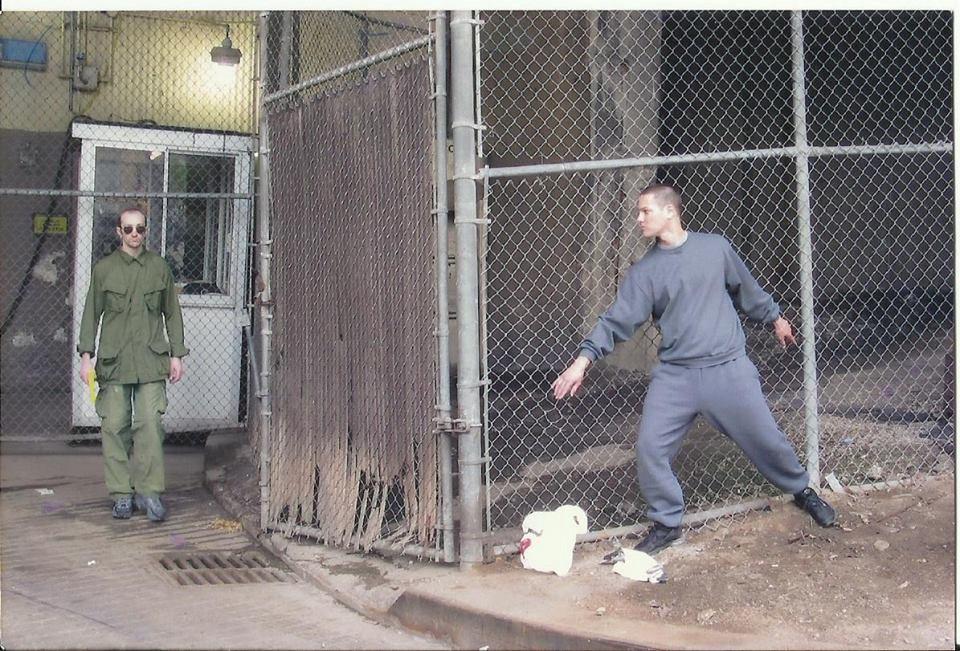
Ninjutsu takes on many forms these days, with many claims and counter claims as to what the style is. Serval things all these modern ninja groups can agree on are, they wear black gis in the dojo, practice weapons, focus on self-defense and survival, and practice or learn stealth maneuvers.
I remember when I was a young teen and practiced Tang Soo Do at a local karate school, and reading about the mysterious art of the Ninja by the only authors available at the time on the subject, Steven Hayse and Ashida Kim. I imagined earning a black belt in this deadly art, dressing from head to toe in the commercially available ninja costume, slipping out the window in the evening for a night time mission.
Thirty something years later after earning a Shodan in one of the well-known Ninjutsu organizations, as well as earning several black belt levels in other systems, that using stealth techniques in real life as a non-military personal, is a lot less dramatic. Do I use methods gained from such study often, yes, do they involve dressing up in a special outfit with a grappling hook and smoke bombs unfortunately no.
To examine the reason for training in stealth technique we have to justify the necessity for taking the time and effort in the first place. Unless you are a secret opts agent working for the military, or someone working in some kind of criminal organization there aren’t a whole lot of practical purposes for such skills. For me personally they are a useful tool for danger prevention. They also lend a helping hand for avoiding awkward situations.

For the past decade I have lived in China a communist country that doesn’t always take the straight forward way of handling business. Often the term cutting through the red tape comes to mind, or perhaps mind games. For a [wai guo ren 外国人] “foreigner” a term used for none Chinese, this situations can be quite a nuisance. For example in the previous city I lived in called Shenzhen, each building complex was surrounded by a gate or fence and a security guard was stationed at the gate’s entrance. This meant upon entering and leaving my residence I would have to deal with the daily chore of being the “none Chinese”. One would think in 2015 being a different nationality would be no big deal, but actually I would daily get prolonged stares by the same people as if they never saw me [or a foreigner] before in their life. To make life simpler, I found an alternative route. This involved going behind the building climbing a fence or two and leaving through a small exist in another gated community. This simple method didn’t involve a single acrobatic flip, smoke bombs or being covered in head to toe in a black masked uniform, though it can be considered just as much of a Ninja technique as the previously mentioned. This method of entering and existing the building meant I could go an entire day unseen by the guards.
When using ninja techniques to avoid danger, two things come to mind, awareness and distance. To begin with one has to be aware of subtle changes, some may say to the point of almost having a sixth sense. For the modern day Ninja student there are ways to train this ability. One method involves standing in a darkened room with a training partner about 15 feet away. The partner will be armed with a practice padded stick or club of sorts. His/her goal is to sneak
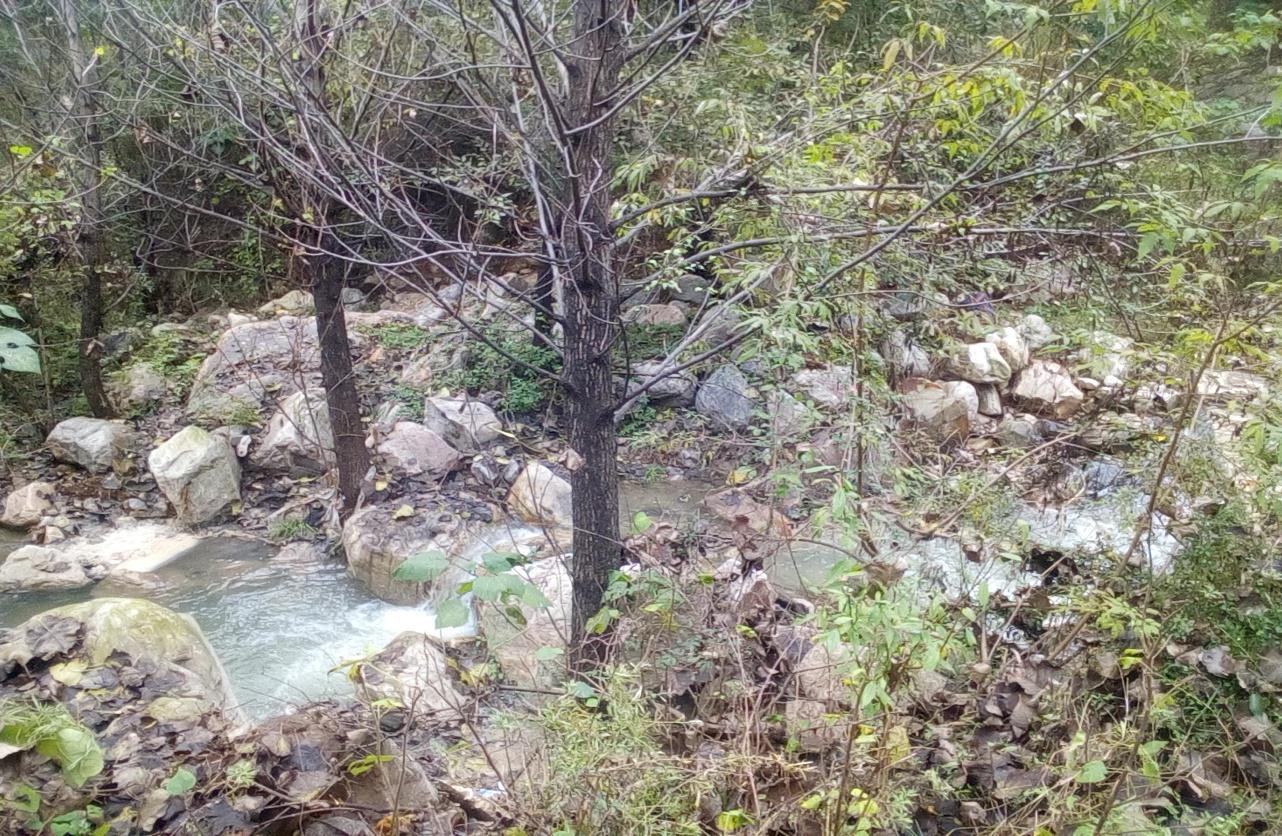
up on you without making a sound and touch you on the top of the head with the practice club. Your goal is to sense him/her and raise your hand as he/she is close and ready to strike. The attacking partner must think violent thoughts, as if he or she wants to actually bash your skull in with a blunt object. It is these feelings that you will pick up on through this training exercise. This is one isolated exercise but even without having ever trained in such a drill a long time martial artist regardless of the style will gain such sensing skills.
The other day I had such an experience. To begin this story I must give a brief introduction to my current situation. For the past decade I have been living and training in Chinese martial arts in China. For the past year and a half I have been living in Songshan Shaolin [birth place of The Shaolin Temple]. Yesterday upon arriving at my Shifu’s school before reaching the outside training yard, which is down a slight hill, I paused and told my wife wait, I want to see if a certain person was outside training with my Shifu’s group. My wife assured me that he had left to work in other city the previous week. This is what we were told, and he had been absent from the school for at least a week. By all accounts he should have been gone for good. Something however told me this wasn’t the case. We were still at a distance and I planned to train in the other yard to avoid a certain someone if that induvial was present. Sure enough my instincts were right. The induvial was present that day.
In this way heightened senses and awareness of distance can be the best defense. If someone is bothering you or has the potential of causing you physical, mental or spiritual harm you can often simple avoid or gain distance form such a threat. As in a physical threat it is always better to be prepared and not taken by surprise. This is not always possible but by training your senses and trusting them often they can prepare you for what is yet to come.
About the Author
Chris Friedman has done the martial arts since
His early teens. He has spent the past decade training in China.
He currently resides in Shaongshan Shaolin as a disciple and assistant instructors to visiting foreign guest. He is also a writer for Kung Fu/Tai Chi Magazine and jetli.com
Monday, August 15, 2016
Kung-Fu: Throws, Locks & Anti-Locking now available at Shadow Warrior Publishing
Amid the chaos of trying to deal with floods, closed businesses and being cut off from many resources and connections I made to help build my business (now lost in the floods). Amid trying to get the Black Dragon Ninjitsu Home Study Course available to the public &, getting behind on projected goals but still trying to move forward. I have the distinct pleasure of publishing Chris Friedman's book Kung-Fu: Throws, Locks & Anti-Locking. Now available for sale at Shadow Warrior Publishing.
This book was a pleasure to read, not only has Chris been living in China and studying at the Shaolin Temple for nearly a decade but, he has starred in documentaries and even went so far as to written articles for Kung-Fu/Tai Chi Magazine. Chris does an excellent job comparing grappling methods of previously styles of martial arts he has studied such Brazilian Jujitsu, Judo, Tand Soo Do and Bujinkan Budo Taijutsu to the Chinese arts of Bagua Zhang, Shuai Jiao and Shaolin Kung Fu. As well as, demonstrating the throws and grappling techniques hidden in Kung-fu forms. Something learned by very few training in The Skill, today.
More so, Chris having lived and trained in China has lived to truth that the Shaolin, and other Chinese martial artists do not focus on a single style (this is often a claim used by "traditionalists" to keep money coming back to them as they do not want students cross-training and spending their money elsewhere) but, instead cross train in different systems to be more complete martial artists. As well as, various stories about the author's own experiences using martial arts for self-defense in America and abroad.
I suggest this book not only to Kung-fu stylists but anyone interested in martial arts and self-defense. Training with Chris Friedman and in China can be achieved by visiting Shaolinwithchris.com to study the real thing in China, as well...
This book was a pleasure to read, not only has Chris been living in China and studying at the Shaolin Temple for nearly a decade but, he has starred in documentaries and even went so far as to written articles for Kung-Fu/Tai Chi Magazine. Chris does an excellent job comparing grappling methods of previously styles of martial arts he has studied such Brazilian Jujitsu, Judo, Tand Soo Do and Bujinkan Budo Taijutsu to the Chinese arts of Bagua Zhang, Shuai Jiao and Shaolin Kung Fu. As well as, demonstrating the throws and grappling techniques hidden in Kung-fu forms. Something learned by very few training in The Skill, today.
More so, Chris having lived and trained in China has lived to truth that the Shaolin, and other Chinese martial artists do not focus on a single style (this is often a claim used by "traditionalists" to keep money coming back to them as they do not want students cross-training and spending their money elsewhere) but, instead cross train in different systems to be more complete martial artists. As well as, various stories about the author's own experiences using martial arts for self-defense in America and abroad.
I suggest this book not only to Kung-fu stylists but anyone interested in martial arts and self-defense. Training with Chris Friedman and in China can be achieved by visiting Shaolinwithchris.com to study the real thing in China, as well...
Saturday, February 20, 2016
Paper Tigers & Ducking Dragons 6: Internet Trolls & BSMA

One of the things that gets funnier and funnier is how the online martial arts community continues to defend each others lies. Especially when I have proven that Barron Shepherd and Don Roley are lying about my past, not once but twice. You have to wonder why? Why lie about someone, slander their name just to make yourself look good if you are truly the better person, art, martial artist and so on..?
Let me break it down for you... To make money or more correctly to keep others from achieving the success they are working for because you haven't found the success you think you deserve. Lets be clear Don Roley is person out to make a buck and he gets to stand up and attack people so other Bujinkan instructors don't have to. This a pattern carried out by Hatsumi when he attacked Karate, Judo & Aikido as ineffective, so his American Cult of Personality followers do this by attacking all others. Course we all know Takamatsu just read the modern documents translated into modern Japanese to invent his system, Takamatsu also lied about being named as Soke of the Kuki family arts of Kukishin Ryu to invent his Kukishinden Ryu. William M. Bodiford explains this in a Koryu.com article on Soke: Historical Incarnation of a title and its entitlements; in a nut shell, Soke is a reference to a ruling economic class of iemoto (Soke) tradition. Since Soke refers not a martial arts title but a familial business system. Common for non-martial arts;
From Koryu.com
Nishiyama (1982b, 273-278) identifies several reasons why martial art lineages never developed into iemoto (a.k.a. soke) systems. Prior to the establishment of the Tokugawa peace, rapid acquisition of military prowess constituted the sine qua non of any system of martial instruction. An instructor who withheld instruction in the most advanced techniques as a family secret, as was the norm among soke who taught peaceful arts, could not have attracted students. For this reason, during the sixteenth century, military students usually attained full initiation rather quickly, after which they were free to teach all that they had learned to their own students. If anyone issued diplomas, they did so on their own authority, without having to pay license fees to any larger organization. After the Tokugawa regime imposed peace on the land, both older and new schools of martial instruction became more structured, more secretive, and developed more complex and time-consuming curriculums. Students who received diplomas no longer necessarily acquired independent rights to issue diplomas themselves.7 The ruling authorities also actively prevented any warrior groups or martial schools from developing organizational bonds across domain boundaries.8 Moreover, the rulers of each individual domain preferred to patronize only their own local martial systems, which could be kept under their own local control. Finally, in an age of peace it became practically impossible for any one martial lineage or group of lineages to demonstrate decisively their superiority over their rivals. Innovative teachers could (and did) devise new methods of martial training and establish new schools without having to risk lives to demonstrate their combat effectiveness.
Oh and Sine Qua Non refers to something that is in essence the standard. So what we see is this, the term Soke is taken from the Kuki family which did teach their art and the associated Shinto practices under a familial ownership organization, especially to alternate Shinto mythologies. To teach Kukishin Ryu martial arts or conduct Kuki family rituals you had to be licensed through the Kuki family. So the many trolls who argue Hatsumi is the only true source, are simply trying to protect Hatsumi's ownership of ninjutsu (which is a joke because no one owns ninjutsu), though Hatsumi owns Togakure Ryu and the other associated ryu (except for the others claiming the same lineages like the Genbukan).
At best Takamatsu made up his Ninpo tradition copying from historical documents, at worst he made up his Ninpo tradition based of the 60s Japanese Pop-Culture Ninja Boom. Thus anyone claiming ninjutsu outside of the Takamatsu-den must be attacked as frauds to claim ownership of a particular lineage and the art of ninjutsu itself. This is why men like Jinichi Kawakami in Japan, Anthony Cummins, Chosin Ninja Greg Park, Frank Dux, Ashida Kim and myself must be attacked... Its is simply marketing and claiming ownership of an art that fraudulently claims to be the root of all "ninjutsu."
What is even funnier is that these "online experts," who have to lie under the guise of "fraud busting" to keep from being called out as frauds devoted to a fraud themselves, have taken to attacking "Jay" and Damian Ross of the Self-Defense Company frauds and spreading lies about them as well. Because I simply asked a friend who is an instructor for Damian Ross to write an article for me while I was off working on the Black Dragon Ninjitsu video course.
First off, Defendo/Defendu is not a iemoto system, their is no "Soke" of the art. Anyone trained in the lineage can claim the lineage as a source of information. Defendu/Defendo is a Western Martial Art and not a Japanese system governed by ancient Japanese social rules. Secondly, the issue is this Damian Ross is no fraud nor is he a member of the BDFS. So yes, I do associate with other people outside the BDFS such as Chris Friedman who also wrote for this blog and is in China training in the Shaolin Temple as you read this. What gets even more disruptive to their claims is that I have never met Damian nor do I have any issues with him. In fact, many of the things I discuss and teach are based on concepts he teaches (learned from others outside his lineage such as NCOs I served with in the military) and so I cannot fault him for what he teaches.
Let me give you an example: Color Code Awareness, I am not a fan of color code awareness taught by many self-defense instructors to civilians but, I have this issue because it gets used out of context. I espouse what I call Educated Awareness.

A friend of mine will shoot me a facebook message or text message when he comes across traffic jams, road blocks, or accidents and I do the same for him. We have a system of communicating information between us to maintain educated awareness to expand our situational awareness. Is this method fool proof, no but, neither is watching your local news, meditation to "know without knowing" and seeking some esoteric practice to gain Sakki powers either.
So what is the issue? That the internet trolls are attacking me and, people who actually look at the facts and follow the evidence I put online know that they are liars and frauds attacking others like Damian Ross or an associated instructor of his "Jay" is the only way to cover up the fact they are liars and frauds themselves... Lest we forget "Jay" is also training in the Bujinkan's Budo Taijutsu System, which is what the trolls cannot stand. "Jay" is a Black Belt in Kenpo Kararte, a Combative Instructor under Damian Ross (who they try to demonize) and associated with their ninja-cult... Course in "Jay's" defense he is actually training with someone in the Bujinkan as opposed to arguing and attacking people like Damian Ross in a facebook group.
Once again it is just more stirring the pot to avoid the fact, nothing is set Barron Shepherd & I's little MMA match until we both show up and register as Amatuer MMA fighters with the West Virginia Boxing Commission... Unless Baron wants to arrange an event in Florida? I'd be happy to come to Florida Barron? Oh and Don, you say a person who issues a challenge should come to the challenged, whats the MMA venues like in Colorado? Oh thats not a challenge by the way, that is just me saying if you want to make it a real sanctioned event amd issue a challenge (Like you did with Dan Harmon) I will come to you...
Hell Donny they're even cartoons about how you are such money hungry ass goblin, who disobeyed Hatsumi's wishes and had a Memorial Seminar using Oguri's name to make a quick buck and promote yourself... Is there any doubt, especially given the proof that you'd lie and slander my name to promote your Ninja Cult?
Anything to get away from the fact, Barron "Bitch Titties" Shepherd is a liar and punk ass little bitch who would try to set me up rather then fight me like man... Come one, we're just counting down to March 4th and hell I might shoot a YouTube video from the fighter registration for the Charleston event...
Wednesday, February 10, 2016
Shaolin Kungfu Fighting Methods by Chris Friedman

Shaolin kung fu is often referred to as the origin of martial arts, with the exception of Shuai Jiao [wrestling] which predates the Shaolin Temple . Though the famous Shaolin Temple has been burned down several times by the government and it’s monk killed or dispersed throughout it’s turbulent history, it has been rebuilt and continues to thrives till this day. Shaolin kung fu as a style has changed over the centuries, but still has kept many of it’s original forms and techniques ,due to fleeing monks teaching villagers and keeping the system alive.

Though
the majority of the world’s martial arts can be somehow traced back
to the Shaolin Temple, Shaolin as a martial arts has taken a strange
turn. In china where the art originated many modern day practitioners
practice the art for [鍛煉身體Duan
Lian shen ti] fitness or body/health training. Even the famous monks
at Shaolin, though they spar regularly and occasionally practice
fighting application or some kind of fighting drill, mostly practice
for a form of mind/body exercise.
The
Shaolin monks are often seem demonstrating fast and powerful looking
solo forms, as well as performing highly athletic acrobatic maneuvers
and feats of strength ,but what does all this have to do with
practical modern fighting methods? In fact historically all the
various training methods do relate directly to fighting both empty
handed as well as with weapons, it is just that in recent non warring
times in China the emphasis has been placed on fitness and
performance.

For
this article we will explore the Shaolin methods of preparing the
student for combat. When one begins training in Shaolin Kung Fu, one
will quickly understand that the mind is the most powerful tool. If
one does not seek physical conflict but to live a happy healthy life,
one can change one’s psyche. Thus by training the mind and heart to
be peaceful in those ways similar to the Buddhist belief ,one can
usually avoid a confrontation by simply being tolerant and none ego
driven. For example if one is constantly engaging in sport fighting
events and feels he is indestructible, he may be more prone to engage
in a physical confrontation over harsh words when it may in fact be
an avoidable situation.
With
a proper mind set one will begin one’s training in the art of
Shaolin kung fu. From the beginning of one’s training one will be
forging one’s body to be faster, more flexible and stronger than it
has ever been in the past. Though Shaolin kung fu[and other kung fu
systems as well] do have specific techniques and strategies for
combat, they also place utmost importance on the attributes of their
physical training on making the system work as a whole.
Often
the techniques within the solo routines are hidden. One would not be
able to decipher the meaning without prolonged practice and
fundamental skill training. It is not simply knowing that this move
is a punch ,this move is a kick or throw that makes them work under
pressure. The body must be trained properly in order for these
techniques to work as they were designed to.
When
learning a new routine or form, a Shaolin instructor will not teach
you every application for every move. Over time he will reveal some
of the movements meanings. Each moment in a Shaolin form has actually
several meanings. What appears in a form as a simple pretty poster
may be a lock, throw or strike. One is also encouraged to explore
even create or rediscover the meanings behind the movements. This
goes back to the students attributes being more important then
individual techniques.

Training
the body to be a fighting machine, the Shaolin way starts from the
begin of one’s fundamental lessons. Stances play an important role
in any kung fu system. The primary goal of the stance in kung fu is
to offer stability in fighting. In ancient time as well as modern
being on the ground is a last resort, so having solid stances can
help one form toppling over under pressure or being taken to the
floor intentionally by one’s aggressor.
Stances
also have aggressive maneuvers within their hidden applications. For
example the cross stance or 歇步
Xie Bu in Chinese can be used to
stomp on an opponents knee while simultaneously locking the attackers
elbow. The front stance or 弓步Gong
Bu can use it’s forward momentum to create a powerful push/double
handed palm strike to send an opponent flying backward [a technique
the author used in a real altercation before].

The基本功Ji
Ben Gong or basics of Shaolin kung fu come in the form of a series of
kicking methods and punching drills. Within the kicking series are
certain techniques that are simple designed to stretch the legs and
gain flexibility and agility in the legs of the Shaolin student. The
others are practical fighting techniques that can be utilized in
dangerous situations. One of the author’s Shaolin teachers
mentioned that in a real altercation one should not kick any higher
than the waist of the opponent. Keeping the kicks low prevents the
aggressor from catching the kick and downing the kicker, as well as
preventing the possibility of losing one’s own balance while
launching the kick.
Some
of the most common Shaolin kicks used in combat are the instep groin
kick. In this kick the instep is swung upwards into the opponents’
groin. Low level side and round house kicks to the knees or thighs.
Shaolin students develop power for these kicks not only by practice
low stances throughout solo drills and forms, but also by striking a
variety of pads, bags and posts.

The
punching basics are simple punching drills from various stances as
well as transitioning form one stance to another. These drills are
meant to develop full body power behind ones strikes. For practical
use the Shaolin student’s fighting stance must be modified. The
common Shaolin fighting stance is similar to a boxer’s stance but
the lead hand is held future out in front of the body. This is
because many of the Shaolin techniques involves grabbing with the
lead hand either to pull the opponent into a strike or to help set
up a lock or throw. The lead hand being extended out future in front
of the body also helps in defense against kicks , as in used for
blocking.
When
performing the punching techniques of Shaolin in an actual
confrontation the techniques are performed tighter and from the
shorter more mobile fighting stance. Shaolin has many comprehensive
blocking methods that vary slightly from teacher to teacher. They
usually involve deflecting and trapping the attacking limb while
helping to set up the Shaolin fighter’s attack. As with many other
Chinese Kung Fu systems, the Shaolin fighting methods are done
quickly and aggressively with forward moving footwork to crowd and
disrupt the attackers balance in the process.
Throwing
locking and grabbing an opponents vital areas on one’s body are all
part of the Shaolin fighter’s arsenal. After an attack is deflected
and neutralized the Shaolin fighter will strike with a barrage of
fist ,knees, kicks elbows, head butts[just to name a few] strikes all
while moving forward and crowding the aggressor. After one has
entered one’s space and stunned one’s attacker with several
strikes, the Shaolin fighter can throw, lock or do a combination of
the two to down the opponent and end the confrontation. If the
aggressor wants to continue to fight while in a prone position the
Shaolin fighter has many finishing maneuvers for just such a
situation.

For
the Shaolin practitioner, if he should end up on the ground ,his
primary goal is to regain a standing position. This theory can be
best illustrated by the famous butterfly kick from the ground where
the practitioner swings his legs in a wide circle and the momentum
propels him/her back to their feet. This maneuver is used in the
situation where the Shaolin practitioner is downed and the opponent
remains standing. It has several applications from kicking a standing
opponent’s legs, to sweeping him to the floor, and of course
bringing oneself back to one’s feet. In a broader sense this
application relates the entire theory of ground fighting in Shaolin
kung fu. That one needs to get back to one’s feet regardless of
what grappling maneuver or system the aggressor may attempt/posses.
The author has the fortune to have a coach and friend that previously
taught the author Chinese wrestling[Shuai Jiao] but is also a
professional MMA fighter with a purple belt in BJJ. The author has
focused on learning escapes from popular hold and submission with an
emphasis on escaping and regain a standing position to add to his
Shaolin curriculum.

Body
Condition and two man exercises
The
author has witnessed that the Schools surrounding the main gates of
the Shaolin Temple all seem to participate in free sparring every
Saturday morning. The level of intensity and techniques allowed seem
to be the same from school to school. Punches ,kicks and limited
throws seem to be the norm within these training sessions. The
students spar with a high level of intensity [pretty much full
contact strikes are allowed]. These matches look similar to other
styles when engaged in stand up sparring matches. With a keen eye one
may notice the wide swinging type of hand strikes resembling Shaolin
specific striking techniques seen within the forms. Beside the common
kickboxing/Sanda methods of sparring are many Shaolin specific
conditioning drills and as well as fighting games.
The
forearms and shins are imports tools in any striking systems arsenal.
For this reason it is important to train the body to take sufficient
contact to such areas. In Shaolin kung fu the forearms are used both
in striking as well as defending. There are many two man drills used
to condition the forearms for contact. Simple drills evolve standing
in a stationary stance and banging forearms in a pattern. More
complex forearm drills evolve complex footwork as well as target
practice on the partners body utilizing the forearms as striking
weapons.
There
are several two man sets designed to condition both the instep of the
feet and shins for striking and defending purposes. Again both moving
and stationer drills can be performed with light to moderate contact
being made at the beginning, till one works his way up in pain
tolerance and toughness. For both the forearm and leg drills if a
training partner is not available a tree can be used. It is also
important not forcefully rub out the trained area using the hands and
rubbing away from the heart to help prevent blood clotting.
Body
conditioning drills also exist in Shaolin Kung fu to toughen up the
body against strikes. These come in many forms but are similar to the
leg/arm drills in where you continually strike your partners body in
mirroring movements.
Grappling
drills consist of standing in stances and trying to pull, push or off
balance one’s training partner. One drill that the Shaolin students
play is to assume a right foot foreword horse stance and clasp the
lead hands as if shaking hands tightly. From here simply try to pull
one out of one’s stance without moving one’s own feet. Another
drill is done where both partners face each other in a right foot
forward front stance. Begin by crossing lead arm forearms then trying
to quickly secure a grip of your partners wrist while preventing or
breaking your partners attempt. If a grip is secures you then try to
pull your partner out of his stance while remaining in your stance.
The
first drill will help the student to practice his rooting
ability[stability in one’s stances] as well as pulling strength and
hip movements. The second drill also develops rooting, pulling and
hip movement as well as practice wrist grab escapes and securing a
wrist hold.
This
article gives a brief glimpse into Shaolin Kung Fu as a fighting
systems. In reality one could dedicate one’s entire life to
understanding such a system and still not know it’s entirety. Many
times it has been said that it is not the system but it’s
practitioner that makes a system effective. This can be said for
Shaolin Kung Fu as well. If however the Shaolin student wants to be
an effective fighter, Shaolin has what is needed in it’s system to
do so, as long as one trains appropriately with such methods .
About
the Author:
Chris
Friedman has been doing the martial arts since his early teens. He
has lived in China for the past 9 years studying various Chinese
martial arts. He now lives in Henan 15 minutes from the famous
Shaolin Temple. For more info on Chris or Shaolin kung fu please go
to www.shaolinwithchris.com
Subscribe to:
Posts (Atom)